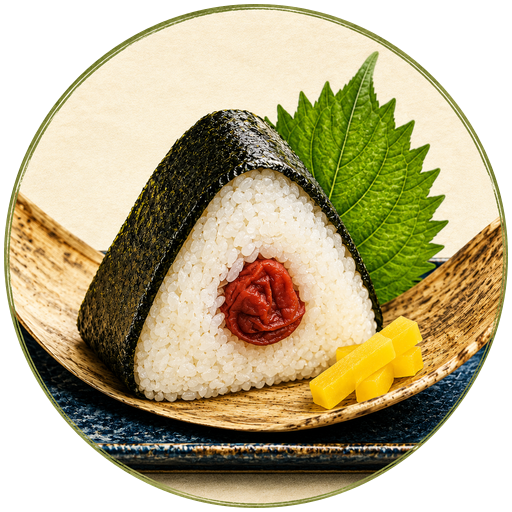
You don't need an expensive salt to make good onigiri. But the salt you use can make a noticeable difference, especially when there's no filling to compete with the rice.
For onigiri, I usually look for a salt with fairly fine grains and a balanced saltiness. Fine salt is easier to spread over damp hands and warm rice, so the seasoning feels even rather than appearing in a few sharp, salty spots.
The difference is easiest to notice with shio onigiri — a plain rice ball seasoned mainly with salt. With no umeboshi, miso, or other filling in the center, the rice and salt have nowhere to hide.
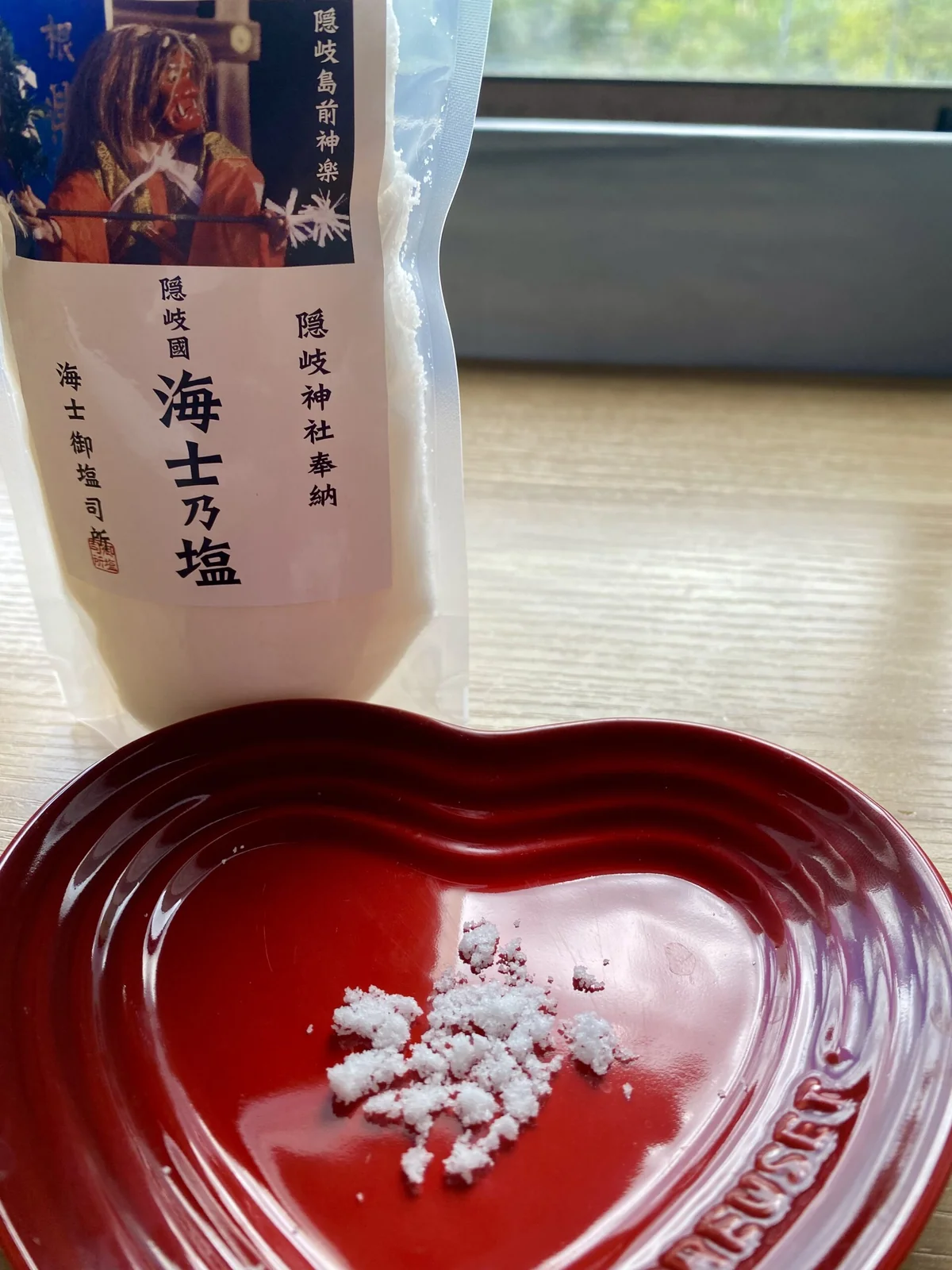
I've bought regional salts from different parts of Japan over the years. One I clearly remember using for shio onigiri is Ama no Shio, from Ama Town in Shimane Prefecture.
On its own, it tasted distinctly salty at first, then mellowed into a softer, savory finish. With warm rice, the salt felt less sharp, and the natural sweetness of the rice came through more clearly.
That's what I pay attention to now when choosing salt for onigiri: how it tastes with the rice.
What Makes a Good Salt for Onigiri?
Three things matter most to me: grain size, the strength of the saltiness, and what happens when the salt meets warm rice.
Grain size
A relatively fine salt is easy to distribute.
When you're shaping onigiri by hand, the usual method is to dampen your hands, spread a little salt over your palms, and then shape the warm rice.
Fine grains dissolve and spread quickly on damp skin. Very coarse crystals are harder to distribute evenly and may leave one bite much saltier than the next.
Coarse salt can still work. If that's what you have, crushing a small amount between your fingers makes it easier to use.
Saltiness
For plain onigiri, the salt should give the rice some definition without taking over.
Freshly cooked Japanese short-grain rice has a mild sweetness, and too much salt can flatten that quickly.
Filled onigiri usually needs even less on the outside. Umeboshi, miso, pickled vegetables, seasoned kombu, and many other fillings bring plenty of salt on their own.
How it tastes with warm rice
A salt can taste quite different on rice than it does straight from the package.
That's why I don't choose onigiri salt by tasting a crystal on its own and stopping there.
Warm rice softens some salts and makes others seem more pronounced. The best test is simply to try a small amount with plain rice.
One Japanese Salt I've Used for Shio Onigiri: Ama no Shio
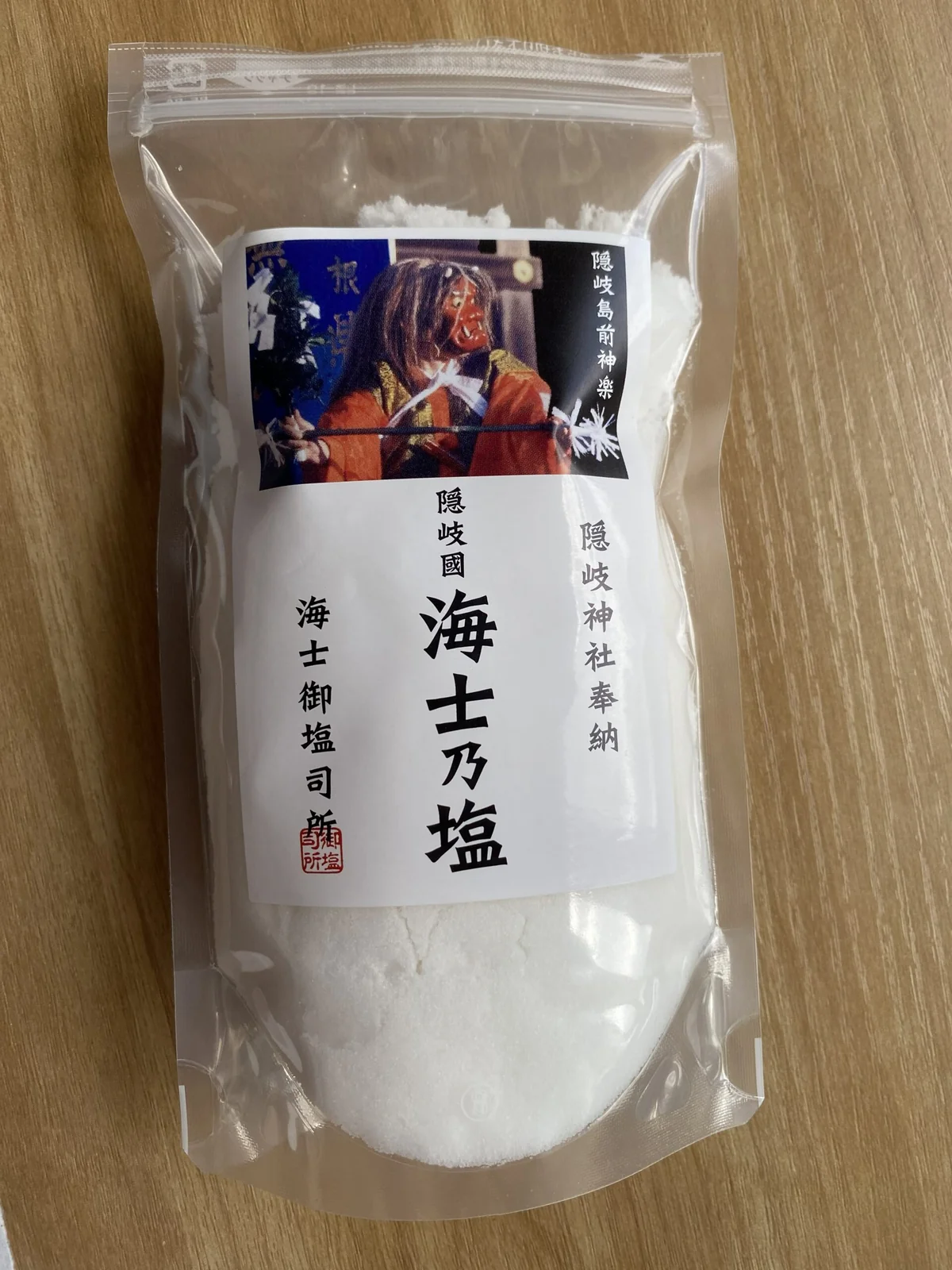
Ama no Shio (海士乃塩) is made in Ama Town on the Oki Islands in Shimane Prefecture.
According to Ama Town, the salt is made from seawater from Hohomi Bay. The seawater is concentrated on racks made from bamboo branches, then heated over local firewood. The salt is drained and dried through a largely hands-on process.
The producer recommends it for onigiri, among other foods.
What stayed with me, though, was the taste with rice.
By itself, Ama no Shio had a fairly clear salty edge. After that first saltiness, the flavor became rounder and more savory.
With a plain rice ball, that edge softened. The sweetness of the rice became easier to notice, and the two worked well together.
I'd happily use it again for shio onigiri.
There are many regional salts in Japan, and personal preference matters, so I don't think one brand needs to win a universal “best salt” title. Ama no Shio is simply one I've actually used with rice and would choose again.
What Does “Japanese Sea Salt” Mean?
Salt labels can be surprisingly confusing.
Under Japan's edible-salt labeling rules, sea salt refers to salt made from seawater.
Japan's salt-making history is closely tied to the sea. The country doesn't have major rock-salt deposits or salt lakes, and its humid, rainy climate isn't well suited to producing salt simply by leaving seawater in large ponds until it evaporates.
For centuries, Japanese salt makers developed ways to concentrate seawater first and then boil the stronger brine until salt crystallized.
Modern production is much more varied.
Some Japanese salt is made directly from Japanese seawater. Other salt sold in Japan may be produced from imported sun-dried salt that is dissolved and recrystallized.
If origin matters to you, the production information on the package is more useful than the appearance of the front label.
What About Moshio?
Moshio (藻塩) is usually explained in English as Japanese seaweed salt.
Under Japan's labeling rules, the term is used for salt containing seaweed components, including salt made by soaking seaweed in seawater during production or by adding permitted seaweed-derived ingredients.
Many types of moshio are beige, tan, or slightly gray rather than bright white.
Its flavor varies from one producer to another, but moshio can be interesting with plain rice because there's very little else competing with it.
I wouldn't buy moshio because it's automatically “better” than regular sea salt. I'd buy it because it's another style of Japanese salt worth tasting.
If you're curious, try it next to a plain sea salt on two small portions of warm rice.
For a closer look at how seaweed salt is made and used, see What Is Moshio Salt?
Which Type of Salt Should You Buy for Onigiri?
You can make onigiri with ordinary salt from your kitchen.
If you're buying salt specifically for rice balls, though, texture makes a practical difference.
| Salt | How it works for onigiri | What you'll notice |
|---|---|---|
| Fine sea salt | Easy everyday choice | Spreads evenly and is easy to control |
| Fine table salt | Works well | Consistent, but use lightly |
| Moshio | Interesting for comparison | Color and flavor vary by producer |
| Coarse sea salt | Works better when crushed | Large crystals can create salty spots |
| Flake salt | Less practical for shaping | Better suited to finishing other foods |
If I were starting from scratch, I'd choose a fine or moderately fine sea salt.
If you already have a fine salt you like, use that first.
A Simple Way to Compare Two Salts
Cook a batch of Japanese short-grain rice and set aside two or three small portions while the rice is still warm.
Use a different salt on each portion.
Keep the amount as close as you reasonably can, and skip the nori and filling at first.
Taste the rice.
One salt may seem sharper. Another may disappear into the rice more quickly. One might make the rice taste sweeter to you, while another stays more noticeable on the tongue.
Then try the same salts with a filling.
The result may change.
A salt that works beautifully with plain rice can seem unnecessary next to a strongly salted umeboshi.
You don't need tasting notes or a scoring system. A few bites will tell you plenty.
How Much Salt Should You Use?
For a plain rice ball, start lightly.
The Japan Onigiri Association gives about 0.6 g of salt for one 100–120 g (about 3.5–4.2 oz) onigiri as a general guideline.
That's more useful than giving one fixed teaspoon measurement because different salts have different crystal sizes and densities.
Fine table salt, coarse sea salt, and kosher salt don't weigh the same spoonful for spoonful.
For filled onigiri, especially with salty fillings such as umeboshi or seasoned kombu, use less.
If you're shaping by hand, dampen your hands and spread the salt over your palms before forming the rice ball.
Make one, taste it, and adjust the next one.
That's easier than trying to find a single measurement that works for every salt and every filling.
Do You Need Japanese Salt to Make Onigiri?
No.
A good fine-grained sea salt from your local supermarket can make excellent onigiri.
Japanese salts become interesting when you want to compare regions, production methods, grain sizes, or styles such as moshio.
They're also easy to explore because you don't need a complicated recipe.
Cook good rice. Make a small shio onigiri. Taste it warm.
That's how I judge a salt for rice: whether I want another bite.
Sources and Further Reading
Salt Industry Center of Japan — Salt Production Method
Edible Salt Fair Trade Council of Japan