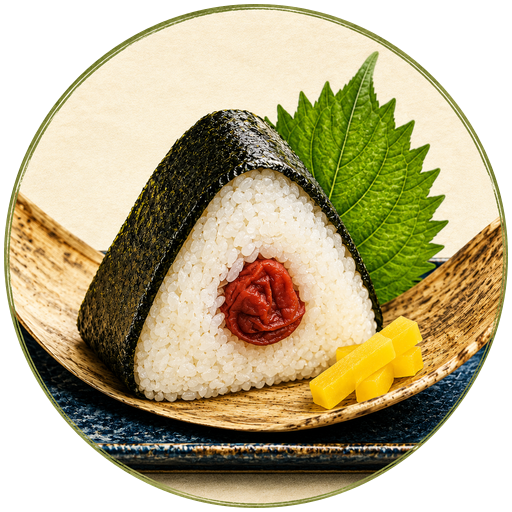
Miso soup can be vegan, but it is not automatically vegan. Check three things: the broth, the miso paste, and the added ingredients. Fish-based dashi makes a bowl unsuitable for vegans even when the visible ingredients are tofu and seaweed.
A restaurant menu may name the toppings without mentioning the stock. An instant packet can be just as misleading if you stop at the flavor name. In both cases, the ingredients behind the soup matter.
The broth is the first thing to check
Dashi is Japanese stock. It can be made with fish, with plant-based ingredients, or with a combination of both. Bonito-based stock contains fish; stock made only with kombu, an edible kelp, and dried shiitake mushrooms provides a plant-based alternative. Hikari Miso uses that combination in its vegan miso soup recipe.
For help with other Japanese stocks, check which dashi ingredients come from fish.
Use these three checks together:
| Part of the soup | What to check |
|---|---|
| Broth | Is the entire stock plant-based, including powders and concentrates? |
| Miso | Is it plain paste, or does it already contain fish-based seasoning? |
| Additions | Are all toppings and other ingredients vegan? |
Finding kombu in the ingredients does not settle the question. A soup can contain both kelp and fish extracts.
Miso paste and miso soup are different
Miso is a fermented paste, commonly made with soybeans, salt, and koji, a fermentation starter. Rice or barley may also be used. Plain miso can be vegan, but some products have stock mixed in already. Hikari Miso’s introduction explains the basic ingredients and fermentation process.
For example, Marukome’s English product catalog lists rice, soybeans, salt, and water for Ryotei-no-Aji Mutenka. Its Dashiiri-Ryotei-no-Aji product instead includes bonito extract and bonito powder alongside kelp extract.
These are different products from the same manufacturer. Check the exact tub or pouch you are buying, rather than treating an entire brand as vegan or non-vegan.
A white miso label from my kitchen
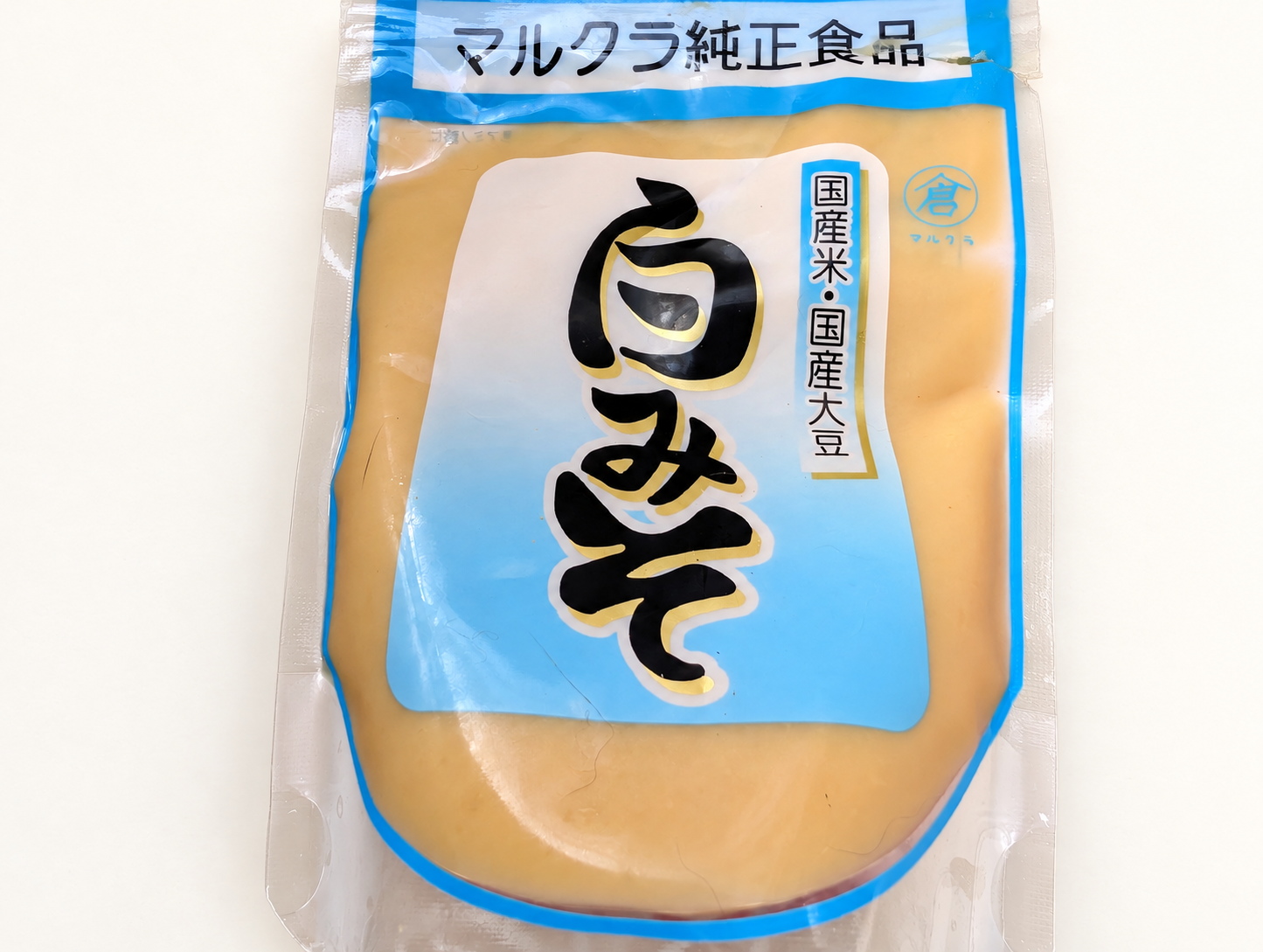
The white miso I have at home is a packaged Marukura product. The ingredient list on this particular package reads 米(西日本産)、大豆(西日本産)、塩: rice grown in western Japan, soybeans grown in western Japan, and salt. No fish ingredients or added dashi are listed.
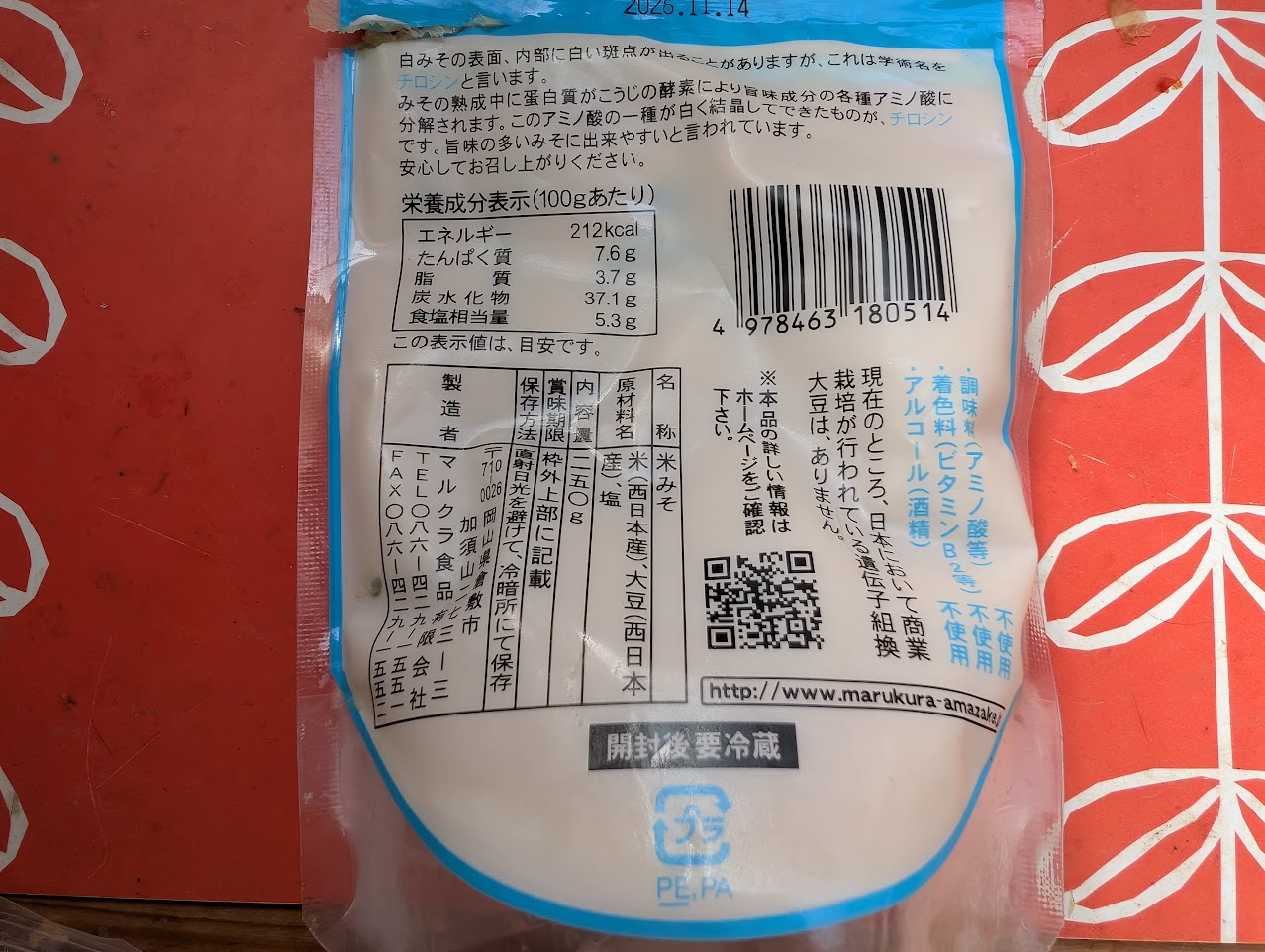
White miso varies by product. With this paste, I would still check the stock and additions before calling the finished soup vegan.
A useful Japanese label: だし入り
だし入り (dashi-iri) means “with dashi”; だし入り味噌 (dashi-iri miso) is miso with stock already mixed in. The label tells you that stock has been added, but you still need to find out what that stock contains.
On Marukome’s Japanese page for Ryotei no Aji (Dashi-iri), the ingredient list includes かつおエキス and かつお節粉末: bonito extract and bonito powder. Both are fish-derived.
| Japanese wording | English meaning | How to read it |
|---|---|---|
| 原材料 / 原材料名 | Ingredients | Look here for the full ingredient list. |
| だし入り | With dashi | Check what the added stock is made from. |
| かつお節 / 鰹節 | Bonito flakes (katsuobushi) | Fish-derived. |
| かつおエキス | Bonito extract | Fish-derived. |
| かつお節粉末 | Bonito powder | Fish-derived. |
| 煮干し / いりこ | Dried small fish (niboshi / iriko) | Fish-derived; also used to make soup stock. |
| 魚介エキス | Fish or seafood extract | Animal-derived. |
| 昆布だし | Kelp stock (kombu dashi) | Vegan when made only with plant ingredients; check for added fish stock or extracts. |
| 昆布エキス | Kelp extract | Plant-derived, but other ingredients may include fish. |
When buying an imported product in the United States, read the English ingredient label on the exact package as well. Do not assume that a product with a similar name has the same formula. Manufacturers may revise ingredients; the package you have matters.
Is restaurant miso soup vegan?
Ask about the broth as well as the toppings. “It only has tofu and seaweed” answers a different question from “What is the soup stock made from?”
You can ask:
Is the broth made without fish or other animal ingredients, including bonito, dried fish, and fish extract?
If the answer mentions kombu, a useful follow-up is:
Is kombu the only stock ingredient, or is it mixed with fish dashi?
In Japan, you can show this question:
このお味噌汁には、かつお節・煮干し・魚介エキスなど、動物性の材料を使っていますか?だしや味噌に含まれるものも確認していただけますか?
It asks whether the soup uses animal ingredients, including bonito, dried fish, or seafood extract, and requests a check of the stock and miso too.
If staff cannot confirm the ingredients, you do not yet have enough information to identify that bowl as vegan.
Is instant miso soup vegan?
Some instant soups contain fish even when the flavor name highlights tofu or wakame seaweed. Check both the soup base and any separate garnish packet.
Marukome’s Instant Miso Soup Ikkyu-San 12-serving assortment is one example. Its official ingredient list includes bonito extract and powder in the soup base, and bonito powder in the listed garnish packets. Setting aside one packet would therefore not make this particular product vegan.
For any instant soup, ask the manufacturer if an ingredient’s source is unclear.
Making a plant-based bowl at home
Start with miso paste that contains no animal ingredients and a stock made entirely from plants.
Tofu, wakame, and sliced green onion all work here, as do vegetables you have on hand. Check any extra seasonings too, especially stock powders or concentrates.
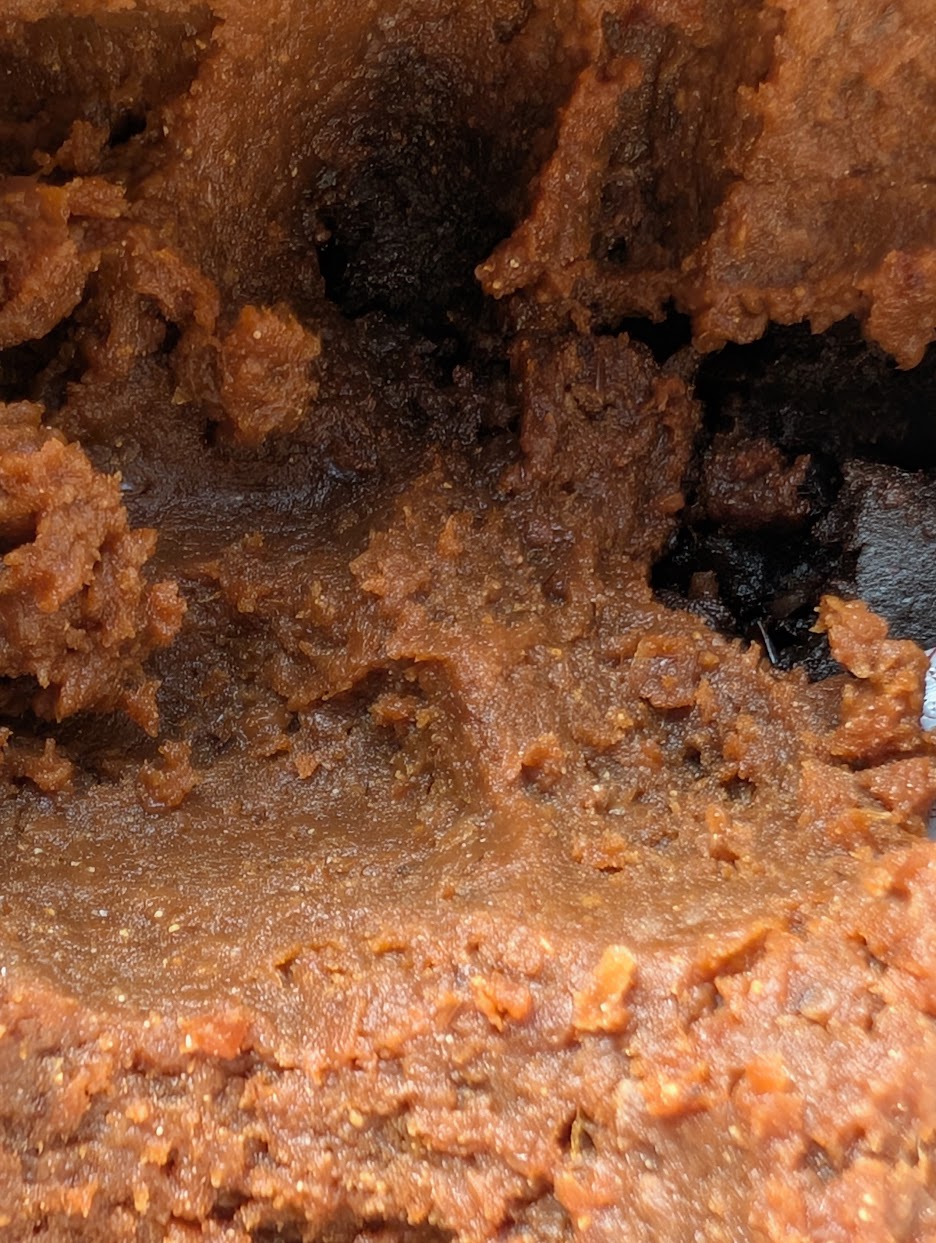
For your next bowl, make a plant-based stock with kombu and dried shiitake.
Sources
- Hikari Miso — What Is Miso?
- Hikari Miso — Vegan Miso Soup
- Marukome — Miso Paste Products
- Marukome — Ryotei no Aji (Dashi-iri), Japanese product information
- Marukome — Instant Miso Soup Products
The Marukura example is based on my own package photograph, checked October 8, 2026. It documents that package rather than every current formulation. Manufacturer information for the other examples was checked on the same date. Always check the current package before purchasing or using a product.